LinkedIn Scraping in 2026: Methods, Tools & What Gets Your Account Banned
A practical guide to LinkedIn scraping in 2026 — methods, tools, daily limits, and the exact behaviours that trigger bans.
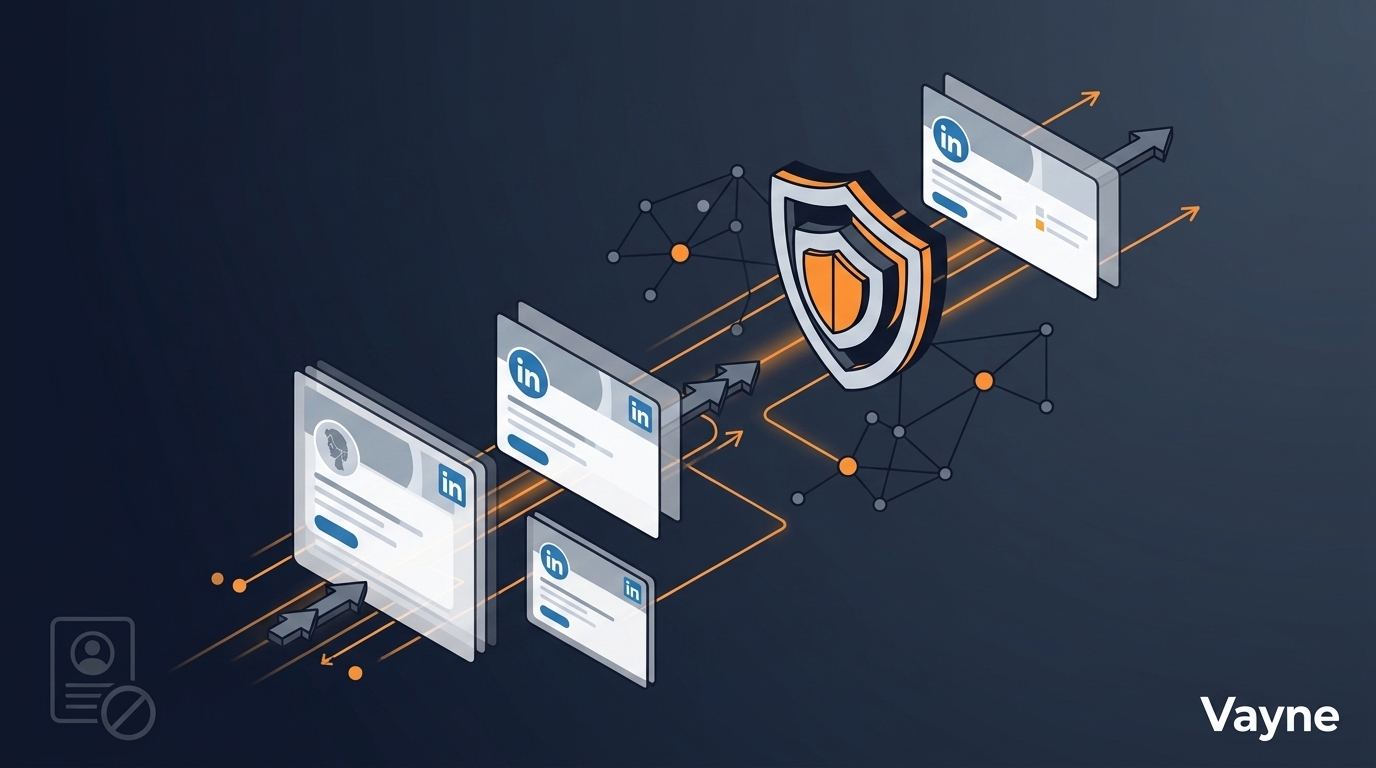
LinkedIn scraping is the process of extracting publicly available profile, company, or job data from LinkedIn at scale. Marketers, recruiters, and sales teams use it to build targeted prospect lists, monitor competitor hiring, or enrich CRM records — without spending hours clicking through profiles manually.
But LinkedIn actively fights back. In 2026 the platform deploys browser fingerprinting, rate-based heuristics, and IP reputation scoring to detect and block scrapers. Understanding which methods are safe — and which ones get accounts banned — is the difference between a working outreach engine and a permanently restricted login.
What Is LinkedIn Scraping?
LinkedIn scraping means programmatically collecting data — names, titles, companies, emails, phone numbers — from LinkedIn pages. The raw material is the same data any logged-in user can see; the difference is automation.
Three types of data are typically targeted:
Profile data — name, job title, company, location, skills, experience
Company data — headcount, industry, recent hires, tech stack signals
Search results — filtered lists from LinkedIn Search or Sales Navigator
Why Sales and Marketing Teams Do It
Manual LinkedIn prospecting is a bottleneck. A rep spending two hours a day clicking through profiles can review maybe 200 contacts. A scraping pipeline processes 10,000 in the same time.
The use cases that drive adoption:
Building ICP-targeted prospect lists from Sales Navigator searches
Enriching inbound leads with current title and company data
Monitoring competitor job posts for market intelligence
Finding warm intros through shared connections at target accounts
The 4 Methods of LinkedIn Scraping (Ranked by Risk)
1. Browser Extensions (High Risk)
Extensions like Phantombuster or older versions of Apollo inject JavaScript into LinkedIn pages and harvest data from the DOM. They run inside your own browser session — so every request carries your real cookies and account credentials.
LinkedIn's detection system flags abnormal scrolling speed, too-fast page loads, and unusual click patterns. Extensions that don't add human-like delays get accounts restricted within days. Typical safe volume: under 50 profiles/day.
2. Python Scripts and Headless Browsers (Very High Risk)
Selenium or Playwright scripts automate a full browser session. They're flexible but carry maximum detection risk: the IP is usually a datacenter address, the browser fingerprint is non-human, and there are no cookies from organic browsing history.
LinkedIn blocks datacenter IPs aggressively. Residential proxies help but don't eliminate the risk, and maintaining a proxy rotation and anti-detection layer is significant engineering overhead.
3. Manual Copy-Paste (Zero Risk, Zero Scale)
Some teams export up to 1,000 connections from LinkedIn's native data export, or manually curate lists from saved searches. This is completely safe and ToS-compliant — but it doesn't scale past a few hundred records per week.
4. Cloud SaaS APIs (Low Risk, High Scale)
Tools like Vayne run scraping infrastructure on hardened, compliant cloud accounts with built-in rate limiting. You pass a Sales Navigator search URL via API and get back structured JSON — no browser, no cookies, no LinkedIn account at risk.
This is the only method that scales to tens of thousands of profiles monthly without ban risk, because the cloud provider absorbs the detection surface.
What Gets Your Account Banned
LinkedIn uses a layered detection system. The triggers that cause bans, from most to least common:
Scraping speed — requesting more than 100–150 profiles per hour from a single session
Datacenter IP — any traffic from AWS, GCP, or Azure ranges is immediately suspect
No browsing history — accounts that only visit search pages, never feed or messages, look robotic
Unusual search patterns — searching the same filter combination thousands of times
Missing human signals — no profile views, no likes, no organic dwell time
The safe threshold for manual or extension-based scraping is generally 50–100 profiles per day from a warm, aged account on a residential IP. Cloud SaaS tools that manage their own infrastructure can operate at 10x–50x that volume.
Is LinkedIn Scraping Legal in 2026?
The landmark case is hiQ Labs v. LinkedIn (Ninth Circuit, affirmed 2022). The court held that scraping publicly available data does not violate the Computer Fraud and Abuse Act (CFAA), because accessing public pages requires no authorization that can be denied.
In practice, this means:
Scraping data visible to any logged-out visitor is generally legal under US law
Scraping data that requires a login (like Sales Navigator results) is a grayer area
GDPR in Europe adds an extra layer: collected data must have a lawful basis
LinkedIn's Terms of Service prohibit scraping — but ToS violations are civil, not criminal
The safe legal posture: scrape only professional and public data, don't store it longer than needed, honour opt-out requests, and use a compliant tool that processes data under a documented legal basis.
How to Choose a LinkedIn Scraper in 2026
The right tool depends on volume and risk tolerance:
Under 500 profiles per month, no budget — LinkedIn native export or manual curation
500–5,000 per month, some tech skill — a cautious extension on a warm account with delays
5,000+ profiles per month with Sales Navigator — a cloud SaaS API that manages the scraping layer for you
For Sales Navigator specifically, the API approach is the only one that works reliably at scale. Sales Navigator search results aren't available through LinkedIn's own export, and extensions that try to scrape them trigger rapid account restrictions.
Frequently Asked Questions
How many LinkedIn profiles can I scrape per day without getting banned?
With a browser extension on a warm, residential-IP account: 50–100 profiles per day is the generally accepted safe limit. With a cloud SaaS tool managing its own accounts: 1,000–10,000+ per day depending on the provider's infrastructure.
Does LinkedIn detect scraping through the API?
LinkedIn's unofficial API endpoints are aggressively rate-limited and return 429 errors or serve honeypot data to detected scrapers. Cloud tools avoid this by scraping through real browser sessions on managed accounts, not by calling the API directly.
Can I scrape LinkedIn without an account?
Public profile pages are visible without login, so basic profile scraping is possible. Sales Navigator results, full contact info, and connection-degree data all require authentication — which is why cloud SaaS tools that maintain their own session pool have an advantage.
What's the difference between LinkedIn scraping and LinkedIn data enrichment?
Scraping extracts data from LinkedIn pages. Enrichment matches existing records against a database to append contact details. Many tools combine both — Vayne, for example, scrapes Sales Navigator search results and then optionally enriches each profile with verified email and phone.
Ready to scrape Sales Navigator without risking your account? Vayne's free tier lets you export 100 profiles per month — no credit card required.